The Complete Tattoo Aftercare Guide: Day-by-Day Healing Instructions
Published October 2, 2026 · by Adora
A fresh tattoo is controlled skin trauma, so good healing depends on clean hands, a simple routine, and patience. At Adora Ink in Fuenlabrada, Madrid, we give instructions adapted to the piece, placement, skin, and dressing. This guide explains the normal stages, but your artist’s specific advice an
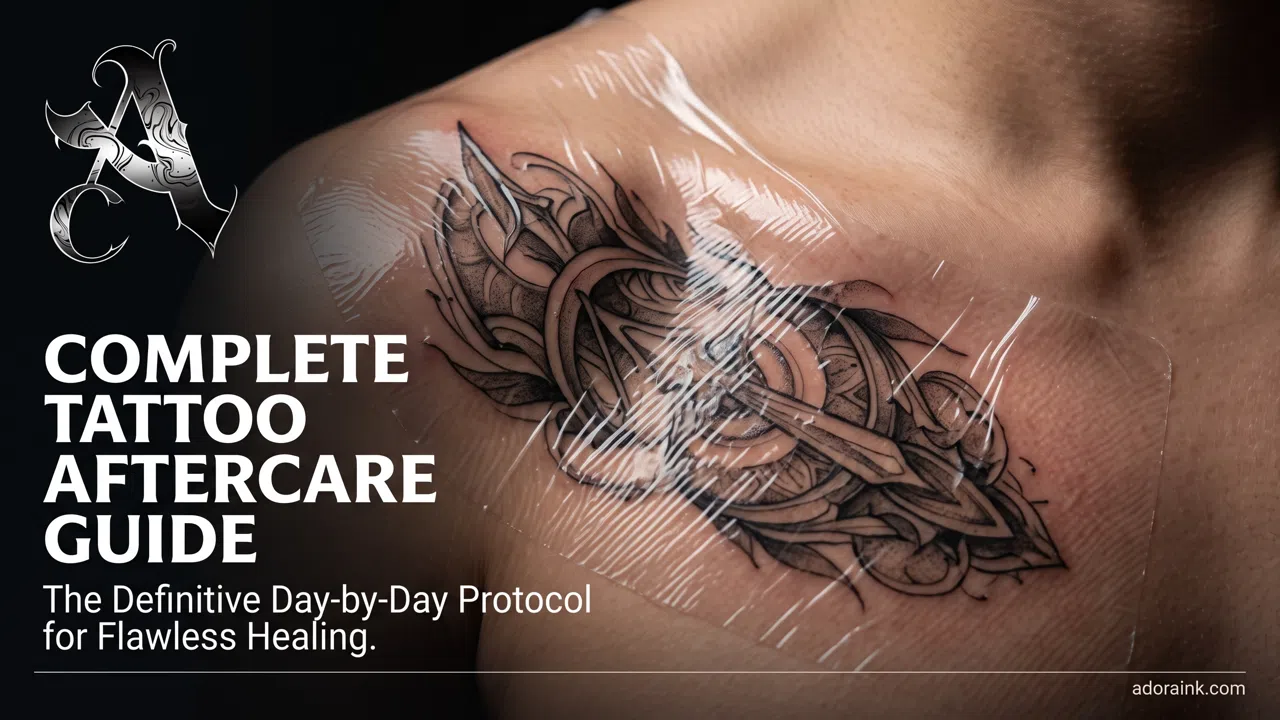
A fresh tattoo is controlled skin trauma, so good healing depends on clean hands, a simple routine, and patience. At Adora Ink in Fuenlabrada, Madrid, we give instructions adapted to the piece, placement, skin, and dressing. This guide explains the normal stages, but your artist’s specific advice and medical guidance take priority.
Day 0: protect the fresh tattoo
Before leaving the studio, the tattoo is cleaned and covered. A medical-grade breathable adhesive film such as Saniderm or Dermalize may remain in place for three to five days if its seal stays intact. A pocket of plasma, ink, and a little blood beneath it can be normal. If it leaks, rolls back, exposes the tattoo, or causes intense irritation, remove it with clean hands under lukewarm water and follow the washing routine. Ordinary plastic wrap is different: remove it after two to four hours and never rewrap unless your artist specifically instructs you.
Days 1–3: wash without overworking
If the tattoo is uncovered, wash your hands first. Rinse with lukewarm water and gently clean using a mild, fragrance-free soap. Do not scrub, use a sponge, or hold the area under a powerful jet. Pat dry with clean disposable paper and allow a few minutes of air drying. Apply only a very thin layer of specialized tattoo aftercare lotion or light fragrance-free healing ointment. Too much product traps moisture and can clog the surface.
- Wash gently two or three times daily, or after obvious contamination.
- Wear clean, loose, breathable clothing that does not rub the tattoo.
- Keep pets, dirty bedding, gym equipment, and unwashed hands away.
- Avoid alcohol excess, heavy sweating, and stretching the area unnecessarily.
Mild warmth, redness close to the tattoo, tenderness, and small amounts of clear fluid usually reduce each day. Review our studio hygiene guide to understand why clean setup and aftercare form one continuous safety process.
Days 4–7: peeling and itching
The tattoo often looks dull and starts flaking like a mild sunburn. Itching is common. Never scratch, pick, or pull skin, because premature removal can reopen the surface and lift pigment. Tap around the area lightly or apply the recommended thin layer of lotion when dry. Continue short showers, but do not soak in baths, pools, hot tubs, saunas, the sea, or lakes.
Healing is not improved by adding more products. Clean, lightly moisturized, protected skin usually needs consistency more than intervention.
Exercise depends on placement and size. Avoid friction, shared mats, prolonged sweat, and movements that repeatedly stretch the tattoo. If returning to training, clean the area promptly and stop if the skin feels tight or irritated. Our placement guide explains why movement and sensitivity vary by body area.
Days 8–14: let the barrier rebuild
Flaking normally decreases, although the tattoo may look cloudy or uneven beneath a thin new layer of skin. Keep using fragrance-free lotion sparingly. Do not exfoliate, shave directly over the tattoo, or test whether remaining flakes are ready. Avoid direct sunlight; fresh tattoos should be covered with loose clothing rather than sunscreen until the surface has closed.
Planning matters before healing starts. Read how to prepare for a tattoo session, compare fine-line and traditional work, and learn how needle motion affects the skin in our machine stroke guide.
Weeks 3–4 and long-term care
The epidermis generally appears healed after two to three weeks, but deeper dermal repair continues for two to three months. Once fully closed, use broad-spectrum high-SPF sun protection, moisturize when needed, and avoid repeated tanning. UV exposure degrades contrast and color over time; see our summer tattoo care advice. Small settled areas may be assessed for touch-up only after adequate healing.
Warning signs that need attention
Redness that spreads rather than shrinks, worsening pain, increasing heat or swelling, thick yellow or green discharge, foul odor, red streaks, fever, or chills are not routine healing. Contact a medical professional promptly. An itchy rash matching an adhesive border may indicate irritation; remove the film as advised and contact the studio. Do not diagnose infection from photographs or treat it with leftover antibiotics. If you are uncertain, contact Adora Ink and seek healthcare when symptoms are significant.
Styles and healed-result references
Aftercare protects every visual language, from a Fine line black and gray tattoo artist result and Healed black and gray tattoo results to a Solid blackwork tattoo. Clients also research Sacred geometry blackwork tattoo, Custom ornamental blackwork tattoo, Black and gray tattoo cover up, Realistic shading black and gray tattoo, High contrast black and gray tattoo studio, Blackwork tattoo stippling shading, Award winning black and gray tattoo, Soft edge watercolor tattoo composition, and Neo traditional floral tattoo sleeve. Each style heals through the same biological stages, even when saturation and surface appearance differ.
Prepare for a calm recovery
Set out clean bedding, fragrance-free soap, the recommended moisturizer, and loose clothing before your appointment. Browse our tattoo styles guide, view the portfolio, learn about Adora, or book a session. Clear preparation makes it easier to leave the tattoo alone and let the body do its work.
Frequently asked questions
How long should I keep the protective film or second skin on?
If your artist applied a medical-grade breathable bandage (like Dermalize or Saniderm), keep it on for 3 to 5 days, unless fluid buildup leaks or the seal breaks. If standard plastic cling wrap was used, remove it after 2 to 4 hours and wash the area gently. Can I use Vaseline or plain petroleum jelly on my fresh tattoo? No. Pure petroleum jelly creates an airtight barrier that traps moisture, bacteria, and heat, suffocating the open skin and increasing the risk of infection or ink fading. Use a specialized tattoo aftercare lotion or a light, fragrance-free healing ointment. Is peeling, flaking, and itching normal during healing? Yes. Around days 4 to 7, the epidermis begins shedding dead skin cells, resembling light sunburn peeling. Never scratch, pick, or peel these flakes off, as pulling them prematurely can pull ink out of the dermis and cause patchy spots. When is a tattoo considered completely healed? The outer layer of skin (epidermis) typically heals in 2 to 3 weeks. However, the deeper layers of skin (dermis) take between 2 to 3 months to regenerate fully and settle the pigment.