Fine Line vs. Traditional Tattoos: Why Delicate Lines Require Specialized Technique
Published October 2, 2026 · by Adora
Fine line and traditional tattoos are not simply thin and thick versions of the same drawing. Each style uses a different visual structure, technical rhythm and strategy for ageing. At Adora Ink in Fuenlabrada, Madrid, we decide line weight, spacing and scale around the idea and the skin rather…
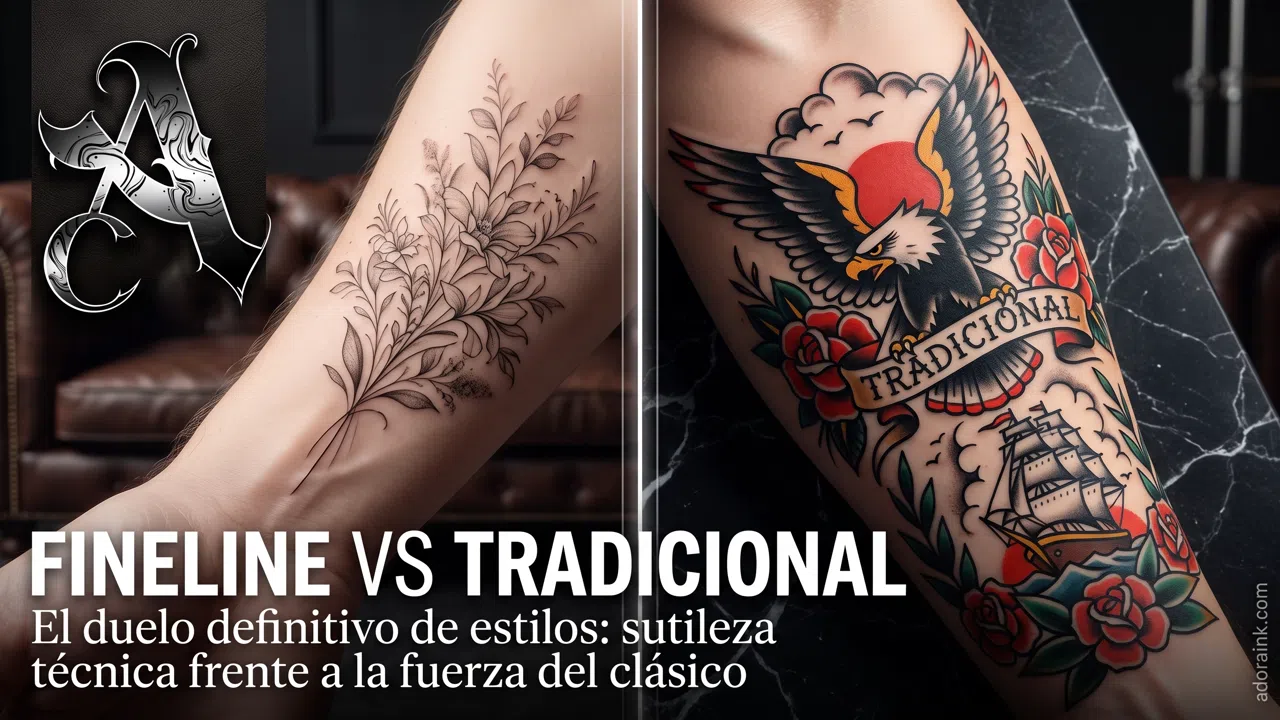
Fine line and traditional tattoos are not simply thin and thick versions of the same drawing. Each style uses a different visual structure, technical rhythm and strategy for ageing. At Adora Ink in Fuenlabrada, Madrid, we decide line weight, spacing and scale around the idea and the skin rather than applying a fashionable needle size to every reference.
What defines fine line?
A fine line tattoo uses restrained line weights, open space and selective detail to create a light visual result. It may be made with a single needle, but many successful pieces use small multi-needle liners. “Single needle” describes a tool configuration; “fine line” describes the finished language. Botanical drawings, lettering, ornaments and miniature subjects all need different choices.
Traditional tattooing relies on strong outlines, simplified forms, solid fills and readable contrast. Its bold vocabulary developed partly because it remains clear from a distance and ages predictably. Fine line exchanges some of that visual redundancy for subtlety, so every millimetre of spacing and depth carries more responsibility.
Why delicate work needs specialization
Thin marks leave little room for correction. If the needle enters too deeply, pigment may spread beneath the intended boundary, creating a blowout. If it is too shallow or the movement is inconsistent, the line may heal broken or pale. Stretch, hand speed, machine response and the angle of entry must remain balanced while following curved anatomy.
Skin is not paper. A design that looks elegant at phone-screen size can be too dense when transferred at three centimetres. A specialist simplifies intersections, opens counters in letters, protects negative space and knows when to recommend a larger scale. Our guide to micro-realism explains similar decisions for miniature tonal detail.
Fine line quality is not measured by how impossibly small a tattoo looks on day one, but by how deliberately it was designed to live in skin.
Will fine line tattoos disappear?
Properly placed pigment does not simply vanish, but every tattoo softens as skin renews, ages and receives ultraviolet exposure. Very pale lines, tiny gaps and crowded micro-details can lose definition sooner than bold traditional shapes. Hands, fingers, feet and high-friction zones are especially unpredictable. A good design anticipates settling instead of pretending it will remain a fresh photograph forever.
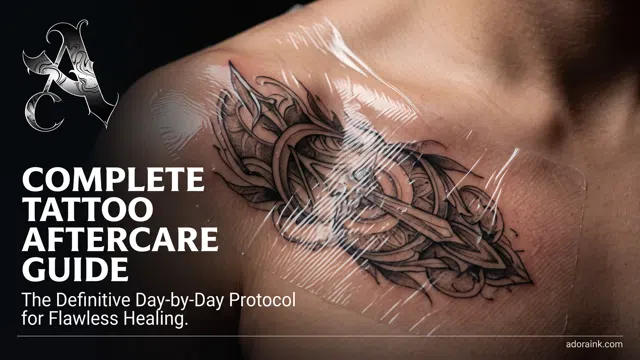
Healing also matters. Do not pick flakes, over-moisturize or expose fresh work to water and sun. Follow the complete aftercare guide and our summer tattoo care rules. Once fully healed, broad-spectrum sun protection helps preserve contrast.
Pain and appointment experience
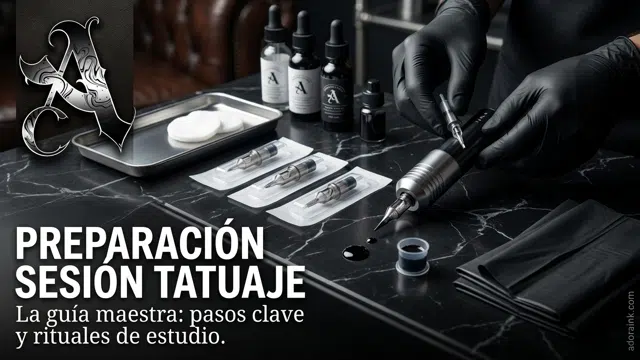
Fine line is often perceived as gentler because it may involve fewer passes and less dense filling. That does not guarantee less pain: placement, duration and personal sensitivity are stronger predictors. A single needle can feel sharp, while traditional colour packing feels broader and warmer. See the tattoo pain chart and use our session preparation checklist.
Traditional work is not inherently rougher, and fine line is not automatically less traumatic. Controlled depth and efficient technique matter more than labels. Professional cartridges, stable machines and hygienic setup support that control; learn more through our equipment, needle and hygiene articles.
Touch-ups and realistic expectations
A healed review reveals whether a touch-up is useful. Some delicate work needs a small reinforcement after the first healing cycle; other pieces heal evenly and should not be repeatedly darkened. Touch-ups cannot rescue an unsuitable scale without changing the design's character. We assess healed photographs, placement and time elapsed before recommending another pass.
Fine line and bold style directions
Clients may compare a fine line black and gray tattoo artist, soft black and gray botanical tattoo, small realism tattoo with readable detail, delicate neo-traditional floral tattoo, solid blackwork tattoo with open space, fine line watercolor tattoo composition, bold traditional old-school tattoo, graphic new-school color tattoo, Japanese tattoo with controlled line weight, fine line Chicano lettering tattoo, precise tribal line tattoo and a delicate color line tattoo. These approaches require different spacing and saturation, not one universal setup.
Choosing the right approach
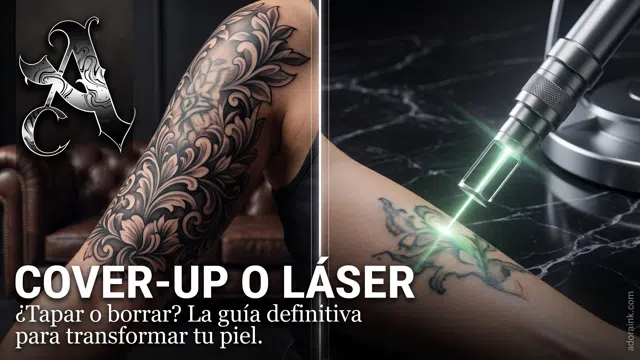
Bring references for mood, not a demand to copy another person's tattoo. We can test size, position and line hierarchy during consultation. Read the broader tattoo style guide, explore the portfolio, learn about Adora, or book a session. If an older delicate piece needs structural change rather than a touch-up, compare options in our cover-up and laser guide.
Frequently asked questions
What is a "blowout" in fine line tattooing?
A blowout occurs when an inexperienced artist presses the needle too deep into the hypodermis (fat layer) beneath the dermis. The ink diffuses uncontrolled through the fatty tissue, creating a blurry, bruised halo around the line.
Will a fine line tattoo disappear completely over time?
No. When ink is deposited into the correct layer of the dermis, it remains permanently trapped within your skin cells. It will naturally soften and broaden slightly over several years, but it will not wash away or vanish.
Do fine line tattoos need touch-ups more frequently than traditional tattoos?
Sometimes. Because delicate lines use single needles with minute amounts of pigment, slight ink loss during scab shedding is more visible than in thick traditional lines. Many artists include a complimentary touch-up after 4 to 8 weeks to refine any faint spots.
Is fine line tattooing more or less painful than traditional tattooing?
Most clients find fine line tattooing noticeably less painful. Single needles create minimal surface trauma compared to large multi-needle groupings, resulting in less swelling, minimal redness, and faster healing.