Understanding Machine Stroke in Tattooing: Why It Matters for Your Skin
Published October 2, 2026 · by Adora
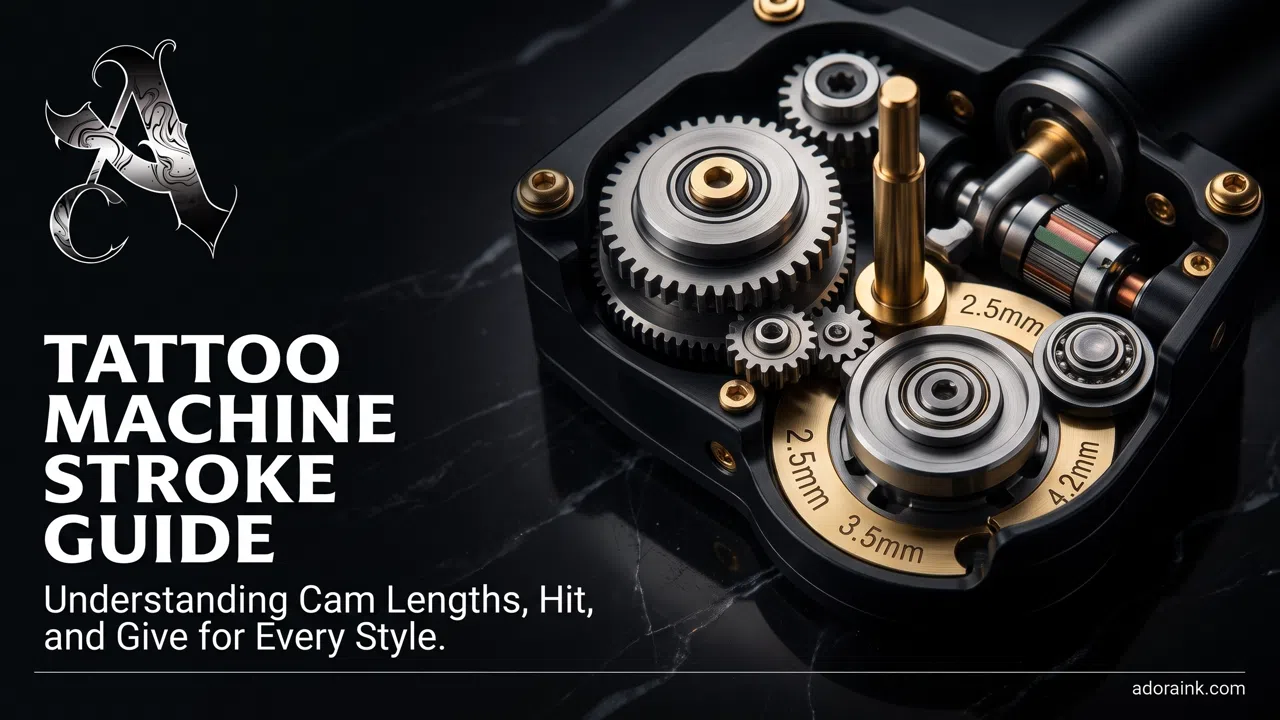
Machine stroke is the distance the needle mechanism travels from its highest to lowest point during each cycle. It is measured in millimetres and is one part of a larger system: needle hang, give, voltage, hand speed, depth, grouping, and the artist’s pressure all affect the mark. At Adora Ink in…
Machine stroke is the distance the needle mechanism travels from its highest to lowest point during each cycle. It is measured in millimetres and is one part of a larger system: needle hang, give, voltage, hand speed, depth, grouping, and the artist’s pressure all affect the mark. At Adora Ink in Fuenlabrada, Madrid, stroke is chosen to support the design and protect the skin, not because one number is universally superior.
What stroke changes
A shorter stroke produces a more compact motion and generally a softer hit. A longer stroke creates a wider mechanical travel and often a more forceful, decisive hit. Stroke does not equal the depth reached inside skin; the artist still controls exposure, angle, stretch, and hand movement. Confusing stroke with depth can lead to unsafe conclusions.
Some rotary pens have a fixed stroke, while adjustable machines allow the cam or mechanism to change travel. Manufacturers such as Cheyenne, FK Irons, and Bishop Rotary publish specifications, but numbers are not perfectly interchangeable because motor behavior, give, cartridge tension, and balance differ.
Short strokes: controlled softness
Ranges around 2.5–3.0 mm are commonly associated with soft shading, delicate transitions, and situations where a gentler delivery is useful. They can support subtle black-and-grey values, but may require slower, repeated passes if used for dense saturation. Repetition can still overwork skin, so “soft” does not mean harmless.
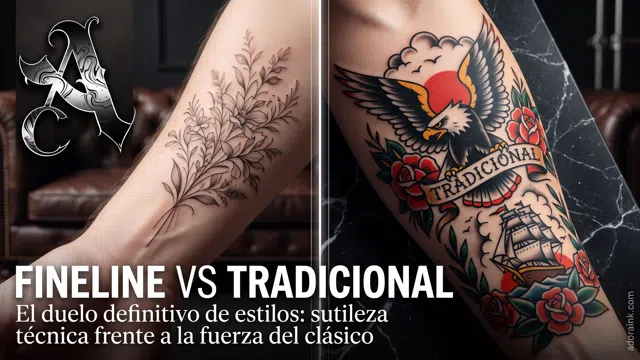
For fine lines, many artists work between roughly 2.5 and 3.5 mm depending on grouping, machine, placement, and technique. A fine-line tattoo needs stable depth and confident movement more than a fashionable setting. Read our comparison of fine-line and traditional tattoos for the design consequences.
Medium strokes: a versatile balance
Around 3.2–3.7 mm is often treated as an all-round range. It can handle lining, whip shading, and moderate color work without changing machines. That versatility makes it popular for mixed pieces, but the artist may still adjust voltage, needle grouping, or hand speed between passages. A medium stroke does not automatically suit every body area or cartridge.
In neo-traditional work, for example, the setup may move from firm structure to softer gradients. Realism may need controlled layering, while black-and-grey tattooing relies on smooth value decisions. Stroke supports these goals; it does not create style by itself.
Long strokes: decisive lines and packing
Long settings around 4.0 mm and above are often selected for bold lining and solid color or black packing. The wider travel can drive larger groupings with a pronounced hit and help place pigment efficiently in fewer confident passes. That efficiency is valuable in blackwork, old-school, and saturated color tattoos.
The trade-off is reduced forgiveness. Excessive pressure, poor angle, slow hand movement, or repeated passes can cause unnecessary trauma. Long stroke is not a license to work deeper. A trained artist watches skin response continuously and changes the setup or pace when redness, swelling, or resistance indicates stress.
Stroke is a mechanical option, not a quality score. The correct setting is the one that makes the intended mark efficiently in a trained hand.
Does stroke change pain?
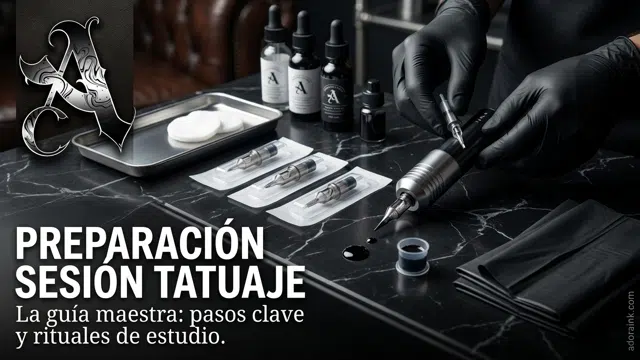
It can alter sensation: a longer, harder hit may feel sharper, while a shorter setting may feel softer. Yet placement, session length, needle grouping, individual sensitivity, sleep, anxiety, and technique usually matter more than the number alone. Explore our tattoo pain chart and session preparation guide. No responsible artist promises a painless tattoo based on machine settings.
Skin, healing, and equipment choices
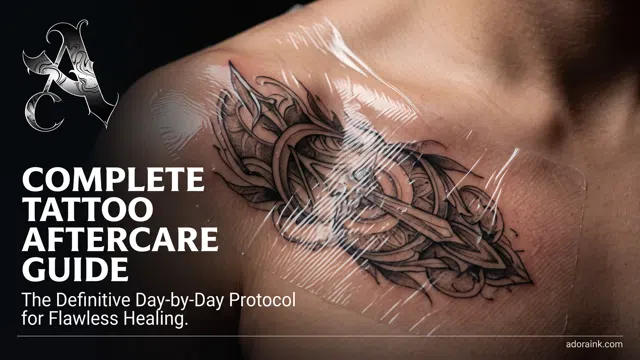
Healthy technique aims to deposit pigment consistently without unnecessary passes. Afterward, follow the complete aftercare guide. Equipment must also be barrier-protected and used with sterile single-use cartridges; our hygiene guide and professional equipment guide explain that safety chain. A premium machine cannot compensate for poor hygiene or weak technique.
Stroke applied across tattoo styles
Technical choices change with the goal represented by phrases such as Fine line black and gray tattoo artist, Healed black and gray tattoo results, Solid blackwork tattoo, Sacred geometry blackwork tattoo, Custom ornamental blackwork tattoo, Black and gray tattoo cover up, Realistic shading black and gray tattoo, High contrast black and gray tattoo studio, Blackwork tattoo stippling shading, Award winning black and gray tattoo, Soft edge watercolor tattoo composition, and Neo traditional floral tattoo sleeve. Each calls for a different balance of impact, speed, grouping, and spacing.
Ask about the result, not a magic number
During consultation, describe the line weight, softness, contrast, and healed look you want. Browse the portfolio, learn about Adora, review our style guide, or book a session. Machine settings remain the artist’s technical route; the client-facing goal is a readable design and respected skin.
Frequently asked questions
What exactly is a "stroke" on a tattoo machine?
The stroke refers to the linear distance the cam wheel moves the needle armature bar back and forth. It dictates how far the needle protrudes and retracts, as well as the momentum and force with which it enters the skin.
Which stroke length is best for fine lines and delicate work?
Short to medium strokes (around 2.5 mm to 3.5 mm) are ideal for fine line and delicate black-and-grey shading. They hit softly and cycle quickly, allowing high precision without tearing delicate skin layers.
Why do artists use a longer stroke (4.0 mm+) for solid black or color packing?
A longer stroke provides greater momentum and needle throw. This extra force drives larger needle configurations into the dermis efficiently, depositing dense pigment without requiring repeated, damaging passes over the same area.
Does the machine stroke affect the level of pain during a tattoo?
Indirectly, yes. When an artist selects the correct stroke for the specific needle grouping and skin type, they deposit ink in fewer passes. This significantly reduces overall skin trauma, inflammation, and discomfort.