How Much Does a Tattoo Hurt? The Pain Chart by Body Placement
Published October 2, 2026 · by Adora
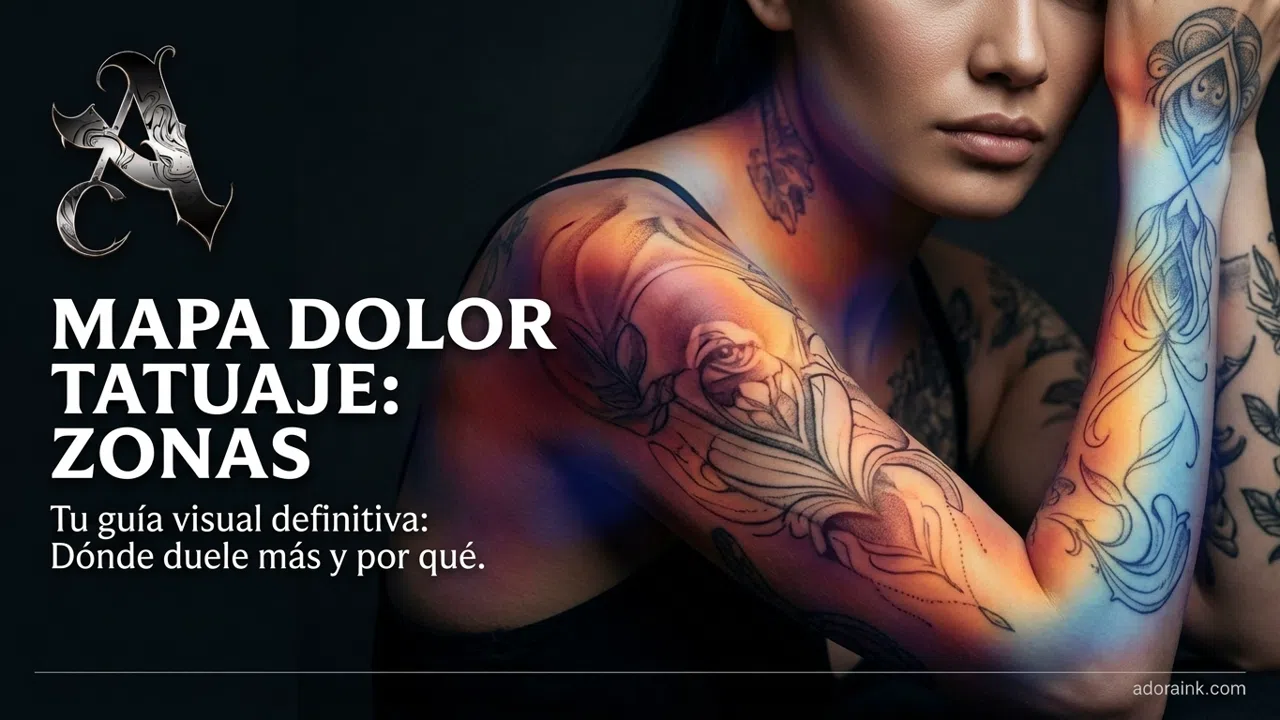
Does getting a tattoo hurt? Yes, but the intensity is not fixed and a tattoo pain chart is only a planning guide. Placement, session length, needle grouping, personal sensitivity, sleep, stress and the artist's pace all change the experience. At Adora Ink in Fuenlabrada, Madrid, we use body-area com
Does getting a tattoo hurt? Yes, but the intensity is not fixed and a tattoo pain chart is only a planning guide. Placement, session length, needle grouping, personal sensitivity, sleep, stress and the artist's pace all change the experience. At Adora Ink in Fuenlabrada, Madrid, we use body-area comparisons to set honest expectations, never to promise that one person will feel exactly like another.
A practical tattoo pain chart
Usually lower intensity: outer upper arm, outer forearm, shoulder, thigh and fleshy calf. These areas often have thicker tissue, fewer exposed nerve endings and less direct vibration against bone. They are common first-tattoo placements because clients can settle into the rhythm more easily.
Usually moderate: inner forearm, upper back, chest muscle, shin, ankle and lower leg. Sensation may rise near tendons, joints or thinner skin. A large design can also turn a manageable area into a demanding session simply through duration and repeated wiping.
Usually higher intensity: ribs, sternum, spine, elbow, knee, armpit, groin, hands, feet and the inner upper arm. Thin padding, concentrated nerves, movement and vibration over bone explain why these appear among the most painful tattoo spots. Pain can change sharply within a few centimetres, especially where a fleshy area approaches a joint or bone.
What tattoo pain actually feels like
Most clients describe a hot scratch, persistent vibration or a controlled stinging sensation. Outlining can feel sharp and precise; shading may feel broader and burning; dense colour packing can become raw as the same region receives more passes. Near bone, vibration may seem to travel beyond the needle's actual contact point. None of these descriptions predicts your exact response, but they are more useful than dramatic one-to-ten claims.
Adrenaline can make the opening minutes feel easier. Later, fatigue, swelling and falling blood sugar may reduce tolerance. That is why a calm pace, planned breaks and realistic session length matter. Read our session preparation guide before arriving and the complete aftercare guide for the days that follow.
Why ribs and sternum are demanding
The rib cage combines thin tissue, bone vibration and constant movement from breathing. The sternum offers little cushioning and sits over a broad bony surface. Maintaining a steady breathing pattern helps, but holding your breath or tensing repeatedly can make placement harder and exhaust you. Designs that wrap from the side toward the front may cross several sensitivity levels in one appointment.
Pain is useful information, not a test of character. Clear communication helps the artist protect both the design and your wellbeing.
Can numbing cream help?
Ask your artist before applying any numbing product. Formulas, timing and occlusion can alter skin texture, stencil stability or vascular response, and some products are inappropriate for certain conditions or medications. Never arrive with an undisclosed cream under plastic. A clinician or pharmacist should answer medical suitability questions; the artist decides whether the prepared skin can be tattooed safely.
Practical comfort starts with sleep, food, hydration and suitable clothing—not alcohol or recreational drugs. Bring a simple snack and water for longer work. Our articles on studio hygiene, professional equipment and REACH-compliant inks explain how the wider process is controlled.
Choosing placement without sacrificing the design
The least painful location is not automatically the best canvas. Anatomy should support flow, scale and ageing. A tiny detailed piece may need a stable, low-friction area; a bold composition may benefit from the shoulder, thigh or back. Compare fine line and traditional tattoos, browse our style guide, and consider how summer care affects exposed placements.
Placement ideas across tattoo styles
Useful starting points include a delicate fine line forearm tattoo, black and gray upper arm tattoo, realism thigh tattoo with soft shading, neo-traditional shoulder tattoo, solid blackwork calf tattoo, watercolor back tattoo composition, bold old-school bicep tattoo, colorful new-school leg tattoo, Japanese sleeve placement planning, Chicano black and gray chest tattoo, tribal tattoo shaped to anatomy and a saturated color tattoo for the thigh. Each phrase describes a visual direction; the final placement should be tested on your body.
Plan your appointment in Madrid
At Adora Ink, pain planning is part of design planning. We can divide ambitious work into sessions, adapt position and discuss breaks without compromising hygiene. See healed and fresh examples in the portfolio, learn more about Adora, or book a session. If an old painful memory concerns a tattoo you now want changed, our cover-up or laser guide explains the next options.
Frequently asked questions
Where is the least painful spot to get a first tattoo?
The outer bicep, outer forearm, upper shoulder, and front/outer thigh are universally ranked as the least painful areas because they feature thicker skin, fewer nerve endings, and adequate muscle padding underneath. Why do ribs and the sternum hurt significantly more? These areas have very thin skin stretched tightly over bone with minimal fat or muscle tissue to cushion the needle's vibration. Additionally, the chest and torso feature dense concentrations of sensory nerves. Should I use a numbing cream before my session? Always consult your artist before applying any numbing cream. Certain topical anesthetics can alter the skin's elasticity, texture, and ink uptake, which can affect the final healed result if applied incorrectly. What does tattoo pain actually feel like? Most clients describe it as a continuous scratching sensation or a mild, localized burning similar to a hot sunburn being lightly scraped. Linework feels sharper and more concentrated, whereas shading feels more like a blunt, vibrating pressure.