Studio Hygiene & Safety: Medical Standards You Must Expect from Your Tattoo Artist
Published October 2, 2026 · by Adora
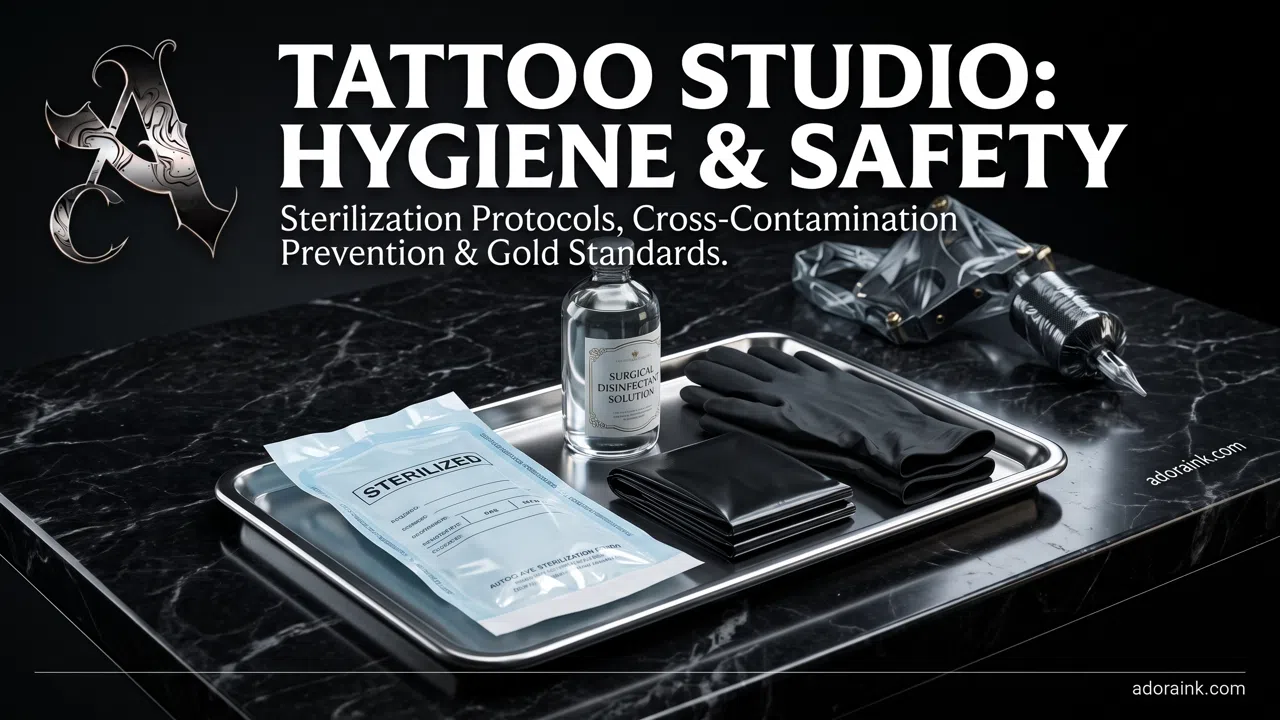
A tattoo studio must treat every session as a controlled procedure involving broken skin. Visual tidiness is not enough: infection prevention depends on documented products, clean-to-dirty workflows, barriers, hand hygiene, single-use sterile items, and regulated waste handling. At Adora Ink in…
A tattoo studio must treat every session as a controlled procedure involving broken skin. Visual tidiness is not enough: infection prevention depends on documented products, clean-to-dirty workflows, barriers, hand hygiene, single-use sterile items, and regulated waste handling. At Adora Ink in Fuenlabrada, Madrid, clients are welcome to ask how the setup protects them.
Before the client enters the work area
Work surfaces must be cleaned and disinfected with an appropriate product, following its contact time rather than wiping it away immediately. The artist prepares only what the session needs, checks packaging and expiry dates, and creates a clean field. Food, drinks, pets, personal bags, and unrelated objects do not belong in the procedure zone.
The studio should maintain washable surfaces, a dedicated handwashing process, suitable sharps containers, and separation between clean storage and contaminated material. Local authorizations and hygiene training matter, but certificates are not substitutes for correct behavior during every appointment.
Sterile, single-use needles and cartridges
Needles or cartridges must arrive individually sealed, sterile, undamaged, and within date. Ask to see the package opened at the workstation. After use, the entire sharp unit goes directly into an approved puncture-resistant container. It is never rinsed, saved, or reused. Quality suppliers such as Kwadron publish cartridge specifications, but brand reputation never replaces checking the actual sterile pack.
Ink caps, razors, rinse cups, and many setup items are also single use. Ink is poured before tattooing without touching bottle tips to contaminated surfaces. Leftover pigment is discarded, never returned to the bottle. Read our equipment and ink guide and EU REACH ink guide for product traceability.
Why machines and cables are wrapped
A tattoo machine cannot usually be heat-sterilized as a complete electronic unit. Disposable barrier film or purpose-made sleeves protect the machine, grip connection, power supply controls, cable, lamp handles, and other touch points from droplets and contaminated gloves. Barriers are removed carefully after the session, discarded, and the underlying equipment is disinfected as appropriate.
Wrapping does not make a dirty machine clean, and disinfection does not make a used needle reusable. Each control has a distinct role. Reliable machines from FK Irons or Cheyenne still require the same barrier discipline.
Gloves and cross-contamination
Nitrile gloves are generally preferred because they are durable, available without latex proteins, and resist many studio products better than thin alternatives. Latex can perform well but may trigger allergy in clients or artists. Gloves must fit, remain intact, and change whenever the artist touches a phone, door, face, drawer, floor, or any unprotected object.
Gloves do not replace handwashing. Hands are cleaned before putting them on and after removal. If the artist must retrieve an item, they should remove gloves, clean hands as required, obtain the item, and put on a fresh pair. Repeated glove changes are a sign of correct contamination control.
Professional hygiene is visible in the sequence: clean hands, protected surfaces, sterile opening, disciplined glove changes, and safe disposal.
Reusable equipment and sterilization
Any reusable instrument that can contact blood requires validated cleaning and sterilization compatible with the item. An autoclave uses pressurized steam and should be monitored through routine indicators and maintenance records. Many modern studios reduce this pathway by using disposable grips and cartridges. Surface disinfectant alone is not sterilization.
Consent, records, and aftercare
A responsible studio confirms identity and age, discusses health factors and allergies, records consent, and tracks relevant pigment batches. It explains risks without promising a risk-free procedure. Aftercare instructions should be clear and available in writing; follow our day-by-day aftercare guide. If spreading redness, worsening pain, pus, fever, or red streaks appear, seek medical advice.
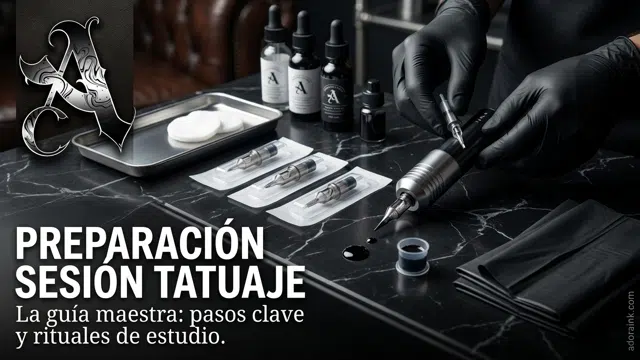
Before attending, use our preparation guide. Technical choices such as machine stroke influence execution, but they never relax sanitary standards.
Safe practice across every style
The same controls protect a Fine line black and gray tattoo artist session, Healed black and gray tattoo results, a Solid blackwork tattoo, Sacred geometry blackwork tattoo, Custom ornamental blackwork tattoo, Black and gray tattoo cover up, Realistic shading black and gray tattoo, High contrast black and gray tattoo studio, Blackwork tattoo stippling shading, Award winning black and gray tattoo, Soft edge watercolor tattoo composition, and Neo traditional floral tattoo sleeve. Style changes tools and pigment use, never infection-control expectations.
What to ask before booking
Ask whether needles are opened in front of you, how machines and touch surfaces are barrier-protected, what happens to sharps, and which hygiene authorization applies. Clear answers build trust. Explore our portfolio, learn about the studio, contact us, or book a session.
Frequently asked questions
How can I tell if a tattoo needle is sterile and brand new?
Professional artists will always open pre-sterilized, single-use needle blisters or cartridges directly in front of you. Check for the intact indicator dot on the back of the medical blister pack showing successful EO-gas sterilization.
Why do artists wrap their machines and cords in plastic?
Barrier films prevent cross-contamination. While the metal frame or power battery cannot be discarded after each client, wrapping them in disposable medical sleeves ensures biological fluids and aerosolized airborne droplets never contact reusable hardware.
Are latex gloves safe for tattooing?
Most modern studios use medical-grade black nitrile gloves rather than latex. Nitrile offers superior puncture and chemical resistance, better tactile grip with lubricants, and completely eliminates the risk of latex allergies for both artist and client.
What certifications should a reputable tattoo studio display?
A reputable studio will display official local public health authority operating permits, certified biomedical waste disposal contracts, and individual artist certifications in Bloodborne Pathogens & Infection Control training.