The Definitive Guide to Tattoo Styles: How to Choose the Right Style for Your Idea
Published October 2, 2026 · by Adora
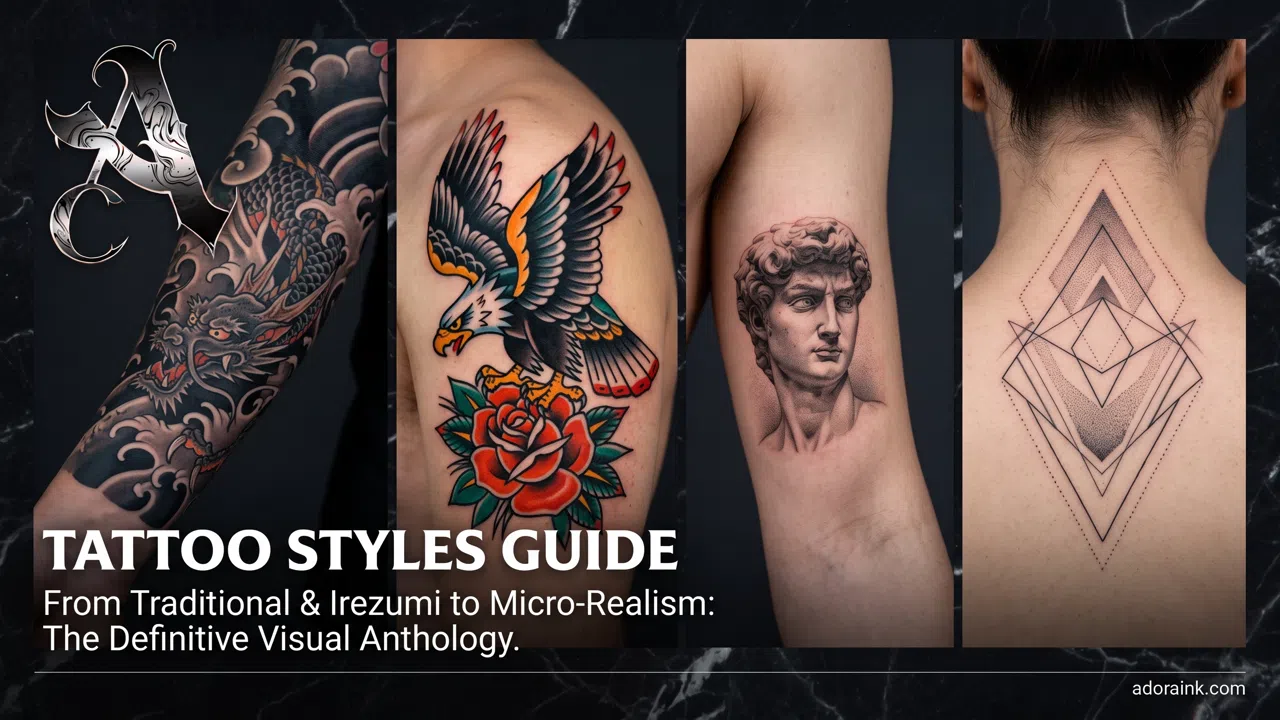
A strong tattoo idea is not only a subject; it is a visual language. The same rose can become a delicate single-needle study, a bold traditional emblem, a blackwork silhouette, or a painterly color piece. At Adora Ink in Fuenlabrada, Madrid, we choose style by considering mood, placement, scale,…
A strong tattoo idea is not only a subject; it is a visual language. The same rose can become a delicate single-needle study, a bold traditional emblem, a blackwork silhouette, or a painterly color piece. At Adora Ink in Fuenlabrada, Madrid, we choose style by considering mood, placement, scale, skin, contrast, and how the design should read after years—not by following a label alone.
Fine line and black-and-grey realism
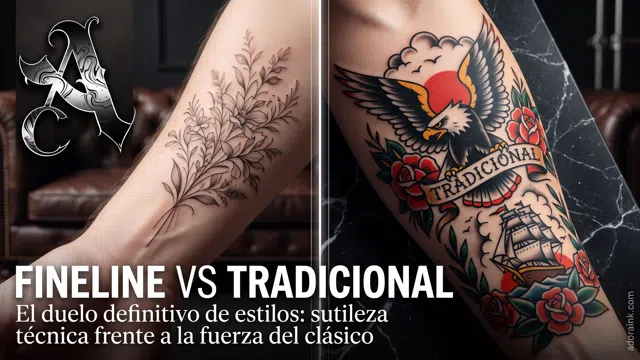
Fine line uses restrained line weights and open space for an elegant result. It suits botanical details, symbols, lettering, and light illustrative work, but very small gaps can merge over time. Good fine line is designed for healing, not simply photographed fresh. Compare its structure with bolder work in fine line versus traditional tattoos.
Black and grey builds form with black pigment, washes, negative space, and value control. Realism adds accurate proportion, texture, light, and depth for portraits, animals, or objects. Both need enough scale to preserve key information. Soft does not mean low contrast: a durable composition still needs dark anchors and clear focal hierarchy.
Traditional and neo-traditional
Traditional or old-school tattooing uses bold outlines, compact shapes, limited palettes, and instantly readable symbols. It is intentionally graphic and ages well because its separations are clear. Neo-traditional retains strong structure while expanding line variation, anatomy, ornament, color range, and dimensional shading.
Choose traditional when you want direct, iconic impact. Choose neo-traditional for a richer decorative narrative. Neither is a quality upgrade over the other; they solve different visual goals. A floral sleeve, for example, may need repeated motifs and background rhythm rather than one enlarged isolated design.
Blackwork, ornamental, and tribal languages
Blackwork ranges from solid graphic masses to stippling, engraving effects, sacred geometry, and ornament. Skin breaks are crucial: they keep dense areas readable. Tribal tattooing should be approached with cultural awareness, correct references, and respect for traditions rather than reduced to generic shapes.
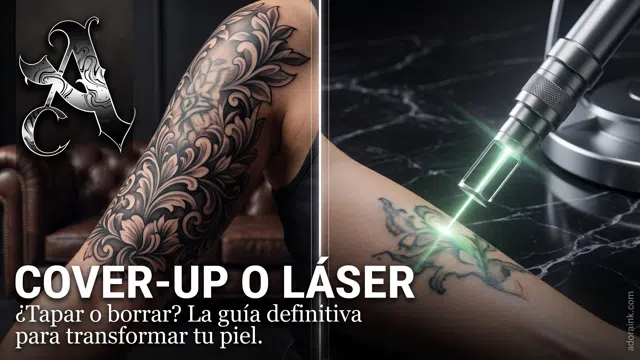
Blackwork can be effective for a cover-up, but the existing tattoo’s darkness and scar tissue define what is possible. A consultation may recommend selective laser fading before redesign. Cover-ups require strategic value and placement, not merely a larger image.
Color-led styles
Watercolor tattoos imitate washes, splashes, and soft transitions. Lasting versions still benefit from deliberate edges, value contrast, or structural anchors. New school favors exaggerated anatomy, dynamic perspective, thick contours, and saturated palettes. General color tattooing can combine illustrative, realistic, or graphic methods.
Japanese tattooing organizes motifs such as koi, dragons, peonies, wind bars, and waves around body flow. Its backgrounds unify large areas. Chicano often uses black-and-grey, fine lettering, portraiture, religious imagery, and smooth tonal transitions. These styles carry visual histories that deserve informed interpretation.
The right style is the one that protects the core idea while fitting the body, available scale, and desired long-term readability.
How to choose
- Collect references for qualities—line, contrast, mood, density—not copies of one tattoo.
- Decide whether you value subtlety, graphic impact, realism, ornament, or color most.
- Show the exact placement and be open to changing scale or orientation.
- Review healed work, not only fresh photographs.
- Choose an artist whose portfolio repeatedly demonstrates the relevant language.
Styles can be combined when they share a clear hierarchy. Fine botanical lines may frame realism; geometric blackwork may organize negative space; neo-traditional structure may hold painterly color. Combining every favorite effect equally often creates noise. One language should lead and the others support it.
Technique, safety, and healing
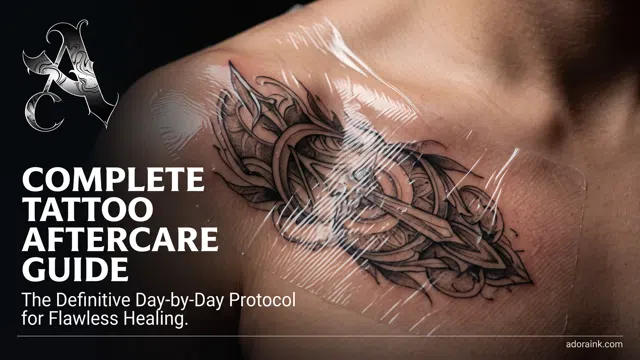
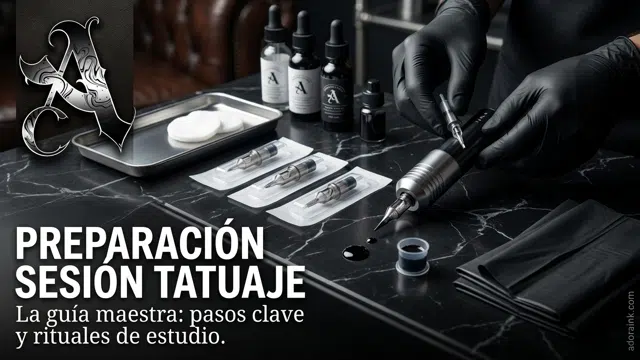
Style affects tool choices, but safety does not change. Read about machine stroke, professional equipment and inks, and studio hygiene. After the session, the aftercare guide applies regardless of aesthetic. For color chemistry, see EU REACH-compliant inks.
Specific style directions
Useful consultation language includes Fine line black and gray tattoo artist, Healed black and gray tattoo results, Solid blackwork tattoo, Sacred geometry blackwork tattoo, Custom ornamental blackwork tattoo, Black and gray tattoo cover up, Realistic shading black and gray tattoo, High contrast black and gray tattoo studio, Blackwork tattoo stippling shading, Award winning black and gray tattoo, Soft edge watercolor tattoo composition, and Neo traditional floral tattoo sleeve. These phrases identify visual priorities that can be translated into an original design.
Turn references into your tattoo
Explore the portfolio, learn about Adora, or book a consultation. Bring references and explain what attracts you to each one. We will refine subject, style, scale, and placement into a coherent custom piece.
Frequently asked questions
What is the difference between Traditional and Neo-Traditional tattoos?
Traditional (Old School) tattoos utilize bold black outlines, a strict primary color palette, and minimal gradient shading. Neo-Traditional builds upon this foundation with varied line weights, realistic proportions, intricate details, and an expanded, lush color palette.
Do fine line and micro-tattoos hold up well over time?
Yes, provided they are applied with precise depth by an experienced artist and protected from excessive sun exposure. Because thin lines carry less pigment, natural skin cell turnover will soften them over the years, making proper SPF maintenance essential.
What is the most versatile tattoo style for cover-ups?
Dark Black & Grey realism, Neo-Traditional, and heavy illustrative/biomechanical designs are the most versatile for cover-ups because their layered textures, deep shadows, and rich compositions can conceal older work.
Can I combine multiple tattoo styles in a single design?
Absolutely. Hybrid concepts—such as realistic portraiture blended with geometric frames or fine line botanicals with dotwork shading—are very popular. An experienced artist will ensure the contrasting elements flow naturally with your body’s anatomy.